

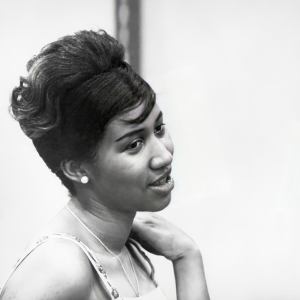
In this post we celebrate the women who lit up the airwaves and rewrote the rules of popular music. From powerful ballads to infectious dance hits, these voices didn’t just sing — they defined eras. Get ready to turn up the volume on a legacy that still inspires and empowers today.
Remember you can listen to my show Breakfast Variety Pack every Wednesday at 8am (UK time) on SineFM.
Click on the track title for the YuTube video and the artists name for their Wikepedia page
Respect – Aretha Franklin

Originally written and recorded by Otis Redding, Respect became a feminist and civil rights anthem when Aretha Franklin reinterpreted it. With its commanding vocals and soulful arrangement, the song.
The song was featured on Franklin’s 1967 breakthrough Atlantic Records debut album, I Never Loved a Man the Way I Love You.
The single topped both the US Billboard Hot 100 and the Hot Rhythm & Blues Singles, here in the UK it peaked at number 10.
| B-side | “Dr. Feelgood” |
|---|---|
| Released | April 10, 1967 |
| Recorded | February 14, 1967 |
| Studio | Atlantic, New York City |
| Genre | Soul, R&B |
Piece of My Heart – Big Brother & The Holding Company (Janis Joplin)

First released by Erma Franklin in October 1967 it reached number 10 on the US Billboard Hot Rhythm & Blues Singles chart.
Janis Joplin’s raw, bluesy voice transformed Piece Of My Heart into a rock classic when she recorded it with Big Brother and the Holding Company and released it in 1968.
Her powerful delivery captured heartbreak and longing with unmatched intensity. It became one of her signature performances and a defining moment of late ’60s rock.
| B-side | “Turtle Blues” |
|---|---|
| Released | August 1968 |
| Genre | Psychedelic rock, Blues rock |
Son of a Preacher Man – Dusty Springfield

Son of a Preacher Man by Dusty Springfield was released in September 1968 from the album Dusty in Memphis.
This sultry soul track gave Springfield one of her biggest hits. Her smoky vocals added depth to the playful lyrics about forbidden love. The song later gained renewed popularity after its feature in Pulp Fiction in the 1990s.
It became an international hit, reaching number 9 on the UK singles chart and number 10 on the US Billboard Hot 100 in January 1969.
| B-side | “Just a Little Lovin’” |
|---|---|
| Released | November 8, 1968 |
| Recorded | September 1968 |
| Studio | American (Memphis, Tennessee) |
| Genre | R&B, Soul, Country |
Ain’t No Mountain High Enough – Diana Ross

Ain’t No Mountain High Enough was first successful as a 1967 hit single recorded by Marvin Gaye and Tammi Terrell.
Diana Ross’s solo version of this Motown classic differs from the Marvin Gaye and Tammi Terrell duet, showcasing her dramatic vocal phrasing. With spoken passages and soaring strings, the song became a number 1 hit in the US and here in the UK it reached number 6 in 1970. It also established Ross as a powerful solo act after leaving The Supremes.
Ross received a Grammy nomination for Best Female Pop Vocal Performance.
| B-side | “Can’t It Wait Until Tomorrow” |
|---|---|
| Released | July 16, 1970 |
| Recorded | March 13, 14, and 18, 1970 |
| Studio | Hitsville USA (Studio A), Detroit, Michigan |
| Genre | Psychedelic soul |
Remember you can listen to my show Breakfast Variety Pack every Wednesday at 8am (UK time) on SineFM.
You’re So Vain – Carly Simon

You’re So Vain by Carly Simon was released as a single in November 1972.
Simon’s wry and witty lyrics fueled endless speculation about who inspired “You’re So Vain.” The track blends folk, pop, and soft rock, with Simon’s voice dripping with both charm and sarcasm. Its mystery has kept fans intrigued for decades.
Simon has said the song refers to three men, one of whom she has named publicly: the actor Warren Beatty.
It reached number 1 in the US, Canada, Australia, and New Zealand, here in the UK it peaked at number 3
| B-side | “His Friends Are More Than Fond of Robin” |
|---|---|
| Released | November 8, 1972 |
| Recorded | 1972 |
| Studio | Trident |
| Genre | Soft rock, Pop |
Killing Me Softly With His Song – Roberta Flack

Killing Me Softly with His Song by Lori Lieberman was first released in 1972 but failed to chart.
With its tender delivery and understated arrangement, Roberta Flack turned this song into a worldwide hit in 1973. The lyrics describe being moved to tears by music, and Flack’s gentle vocals embody that feeling. It later inspired a famous hip-hop cover by the Fugees.
In 1999, Flack’s version was inducted into the Grammy Hall of Fame. It ranked number 360 on Rolling Stone’s list of The 500 Greatest Songs of All Time and number 82 on Billboard‘s greatest songs of all time.
| B-side | “Just Like a Woman” |
|---|---|
| Released | January 22, 1973 |
| Recorded | 1972 |
| Studio | Atlantic, New York City |
| Genre | R&B, Soul jazz |
You’re No Good – Linda Ronstadt

You’re No Good by Dee Dee Warwick was first released in 1963.
Linda Ronstadt brought fiery energy to her version of “You’re No Good” in 1974. Her rock-infused vocals and the track’s sharp production made it her first number 1 hit in the US. The song highlighted her ability to move seamlessly between genres.
The success of “You’re No Good” set a precedent for Ronstadt’s single releases which over the next five years would virtually all be remakes of classic rock and roll songs.
| B-side | “I Can’t Help It (If I’m Still in Love with You)” (w/ Emmylou Harris) |
|---|---|
| Released | November 19, 1974 |
| Recorded | July 5, 1974 |
| Studio | The Sound Factory, Los Angeles, California |
| Genre | Rock, Southern rock |
Heartbreaker – Pat Benatar

Pat Benatar burst onto the rock scene with Heartbreaker in 1979, a fierce anthem that displayed her powerhouse vocals. Its mix of hard rock guitar riffs and pop hooks set her apart in a male-dominated rock world. The song became a defining moment of her career.
The second single released off her debut album In the Heat of the Night after the first, “If You Think You Know How to Love Me”, failed to reach the US Billboard Hot 100. A sleeper hit, it proved to be Benatar’s breakthrough single, reaching number 23 on the Hot 100 while spending four and a half months on the chart.
VH1 ranked the song the 72nd best hard rock song of all time.
| B-side | “My Clone Sleeps Alone” |
|---|---|
| Released | October 26, 1979 |
| Recorded | 1979 |
| Studio | MCA Whitney Studios (Glendale, California) |
| Genre | Hard rock, Arena rock |
Physical – Olivia Newton-John

Physical by Olivia Newton-John is from her 1981 eleventh studio album of the same name, it was released as the album’s lead single also in 1981.
With cheeky lyrics and a danceable groove, “Physical” redefined Newton-John’s image from sweet to sexy. The track spent 10 weeks at number 1 in the US and reached number 7 here in the UK, becoming one of the biggest hits of the 1980s.
Its playful workout-themed video further cemented its place in pop culture.The song won a Grammy Award for Video of the Year and won the Billboard Award for Top Pop Single.
| B-side | “The Promise (The Dolphin Song)” |
|---|---|
| Released | 28 September 1981 |
| Recorded | June 1981 |
| Genre | Dance-pop, Post-disco |
What’s Love Got to Do with It – Tina Turner

What’s Love Got to Do with It by Tina Turner is from her fifth studio album, Private Dancer, both were released in 1984. It would eventually became Turner’s biggest-selling single.
This track marked Turner’s triumphant comeback in the 1980s. Her raspy, emotive vocals on this skeptical love ballad resonated worldwide. It became her first and only US Billboard Hot 100 number 1 hit, earning her multiple Grammys, here in the UK it peaked at number 3.
Mark Millan of The Daily Vault described “What’s Love Got to Do with It” as “three minutes and 48 seconds of pop perfection”. He noted that it is a “soft synth-driven track countered by Turner’s battle weary voice, barely hiding the cynic in her”, and stated that the song “reeks of attitude”.
| B-side | “Rock and Roll Widow” (US)”Don’t Rush the Good Things” (UK) |
|---|---|
| Released | May 1984 |
| Recorded | 1984 |
| Studio | Mayfair Studios (London, England) |
| Genre | Pop rock, R&B |
How Will I Know – Whitney Houston

How Will I Know by Whitney Houston is from her self-titled debut studio album. It was released in November 1985, as the album’s third single.
This upbeat, dance-pop hit highlighted Houston’s soaring vocal range early in her career. Its bubbly sound contrasted with the emotional uncertainty expressed in the lyrics.
The track became a defining hit of mid-’80s pop.It became Houston’s second number-one single on the US Billboard Hot 100 in February 1986, spending two weeks at the top of the chart, and also became her first chart-topper on the Canadian RPM Top 100 Singles chart. It also reached top-10 positions in Australia, Sweden, Ireland, Norway, and the UK, and top-20 positions in the Netherlands, New Zealand, and Switzerland.
| B-side | “Someone for Me””Saving All My Love for You” |
|---|---|
| Released | November 22, 1985 |
| Recorded | 1984 |
| Studio | Mediasound (Manhattan) |
| Genre | Synth-funk, Dance-pop |
Like a Prayer – Madonna

Like a Prayer by Madonna is from her 1989 fourth studio album of the same name. It was released as the album’s lead single in March 1989.
The track blended pop, gospel, and rock with provocative religious imagery. Madonna’s fearless artistry pushed cultural boundaries, sparking controversy and acclaim alike. The song became one of her most iconic and enduring hits.
The song was a huge hit around the world reaching number 1 on no less than twenty seven charts, the video was voted the second-best music video of the 1980s, behind only Michael Jackson’s “Thriller”.
Stephen Thomas Erlewine from AllMusic called the song “haunting” and felt that it displayed a commanding sense of Madonna’s songcraft.
| B-side | “Act of Contrition” |
|---|---|
| Released | March 3, 1989 |
| Recorded | 1988 |
| Studio | Johnny Yuma Recording (Burbank, California) |
| Genre | Pop rock, Dance-pop, Gospel |
Smooth Operator – Sade

Smooth Operator is the first track on Diamond Life the 1984 debut album by Sade.
It was released as the album’s third single in the UK and reached number 19, in the US it peaked at number 5.
With its jazzy sophistication and smooth delivery, “Smooth Operator” introduced the world to Sade’s signature style. The song’s cool atmosphere and sultry vocals made it an instant classic. It helped define the quiet-storm genre of soulful, late-night ballads.
| B-side | “Spirit””Red Eye” |
|---|---|
| Released | 28 August 1984 |
| Recorded | 1983 |
| Studio | Power Plant (London) |
| Genre | Quiet storm, Sophisti-pop, Bossa nova, Smooth jazz |
Thank you for reading this post and remember you can listen to my show Breakfast Variety Pack every Wednesday at 8am (UK time) on SineFM.

Leave a Reply